
What Exactly Is an MP5 FRT and Why Does It Matter?
MP5 FRT Trigger Upgrade: Install Now for Reliable Binary Fire
Picture this: you’re at the range with your MP5, and you want faster follow-up shots without losing the pistol’s legendary control—that’s where the MP5 FRT (forced reset trigger) steps in. It works by using the bolt’s forward motion to mechanically reset the trigger, letting you fire nearly as fast as you can pull it, while still requiring a separate pull for each shot. In practice, this means you get a much higher rate of fire with a familiar, binary-like feel, yet you stay in full manual control—perfect for competitive drills or just having a blast with a classic platform. To use it, simply install the drop-in trigger pack, ensure your MP5 is unloaded for assembly, and then practice a light, consistent finger rhythm to keep the cycle smooth.
What Exactly Is an MP5 FRT and Why Does It Matter?
The MP5 FRT, or forced ps90 frt trigger reset trigger, is a drop-in trigger pack that replaces your standard MP5 trigger group. It uses the bolt’s forward motion to mechanically reset the trigger, letting you fire each shot with a fresh, light pull. This means you can shoot dramatically faster than a standard trigger, getting close to full-auto cadence while keeping the firearm semi-automatic. It matters because it transforms the MP5’s already smooth recoil into a blistering, controllable burst, making it a favorite for competitive shooters or anyone chasing that “binary-lite” feel. Installation takes about ten minutes with a push pin and no permanent modification. The key is understanding that it requires a deliberate, firm finger press—it won’t “bump-fire” on its own. Reliability depends heavily on using the correct locking piece and a well-tuned host. However, don’t expect it to feel like a stock trigger; the reset is aggressive and takes a few mags to master. For MP5 owners, it’s the simplest way to drastically increase fun-per-round.
Clarifying the Core Function of a Forced Reset Trigger for Roller-Delayed Platforms
A forced reset trigger (FRT) for roller-delayed platforms like the MP5 does not alter the bolt’s mechanical timing; instead, it uses the bolt’s forward travel to physically push the trigger shoe back into position before the shooter’s finger releases it. This creates a manual trigger reset dependent on bolt return, meaning the sear is re-engaged only after the bolt slams home. For roller-delayed systems, the FRT’s core function must synchronize with the delayed blowback cycle: the reset force must occur after the rollers fully retract but before the bolt reaches battery, avoiding a premature hammer drop.
- Bolt carrier moves forward, pushing the trigger’s reset lever.
- Lever rotates the trigger shoe forward, re-cocking the hammer.
- Shooter’s finger, still depressed, is physically overridden—no voluntary release required.
- Next round fires only when the bolt’s forward momentum completes the reset.
The result is a shot per bolt cycle, not per finger release, preserving the MP5’s inherent cyclic rate.
Key Differences Between a Standard Trigger and a Forced Reset Design

A standard MP5 trigger uses a sear that releases the hammer, which then cycles fully before the shooter must manually release and re-pull the trigger. A forced reset design mechanically pushes the trigger forward against your finger immediately after the hammer falls, so your finger must only ease forward before pulling again. This reduces the reset travel to near zero, allowing faster follow-up shots. The standard trigger has a distinct wall, a long reset, and a crisp break; the FRT has a shorter, mushier wall and a tactile bump. In practice, the key sequence is: (1) pull through the break, (2) hold as the bolt carrier forces the trigger back, (3) release pressure minimally to reset, (4) pull again—without ever lifting your finger from the shoe. This changes your grip and timing, requiring a light, steady hold to avoid trigger slap or double-fire.
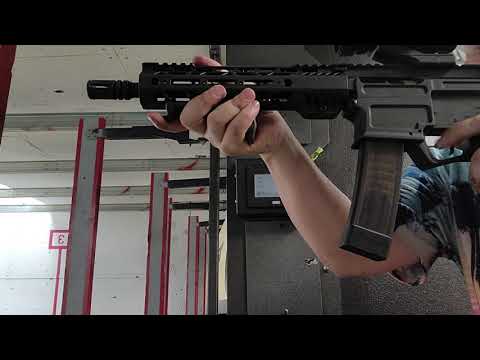
How Does the Forced Reset Action Actually Work in an MP5 Clone?
The bolt carrier slams forward, chambering the round, and the hammer follows—but the forced reset trigger in your MP5 clone doesn’t wait for you to release it. Instead, the trigger’s disconnector is mechanically shoved back into place by the bolt carrier’s forward travel, literally forcing the sear to reset *before* your finger moves. This means the trigger face pushes your trigger finger forward faster than you can pull it, so each shot fires from a fully reset position without the shooter ever consciously letting go. You feel a rapid, rhythmic pulse—like the gun is tapping your finger—as the carrier’s momentum does the work. The clone’s roller-delayed action amplifies this by keeping the carrier speed consistent, which makes the forced reset cycle unnervingly smooth. However, if your bolt gap is too tight, the carrier’s travel shortens, killing the reset frt 15 trigger window. The trick is tuning the locking piece and spring so the carrier’s forward stroke always ends with that decisive trigger slap, not a sluggish nudge. That’s the entire magic: the gun resets itself, and you just hold on.
The Mechanical Sequence: From Reset to Next Shot Without Full Automatic Fire
After the hammer drops, the bolt carrier’s rearward wot trigger travel compresses the action spring, and the trigger’s sear is held back by the disconnector. As the carrier moves forward, the FRT trigger blade’s cam surface pushes the trigger bar forward, releasing the disconnector *before the bolt fully chambers the next round*. This allows the sear to slip off the hammer’s catch, which then follows the bolt home and fires as soon as the round is seated. The cycle repeats only because the trigger’s reset and release happen during the bolt’s forward stroke, not after it stops. The shooter’s finger never changes position; the carrier’s momentum drives the entire sequence, creating a rhythmic, semi-automatic pull for each shot. *The critical nuance is that the hammer falls while the bolt is still moving, so the action never pauses, but the trigger physically breaks each shot independently*—no sustained sear contact means no full-auto lockup.
The forced reset in an MP5 clone uses the bolt’s forward motion to reset and release the trigger, firing each round only after the previous hammer fall, with no automatic sear engagement.
Understanding the Role of Bolt Travel and Trigger Geometry in Cycle Speed

In an MP5 clone with a forced reset trigger, bolt travel and trigger geometry dictate the practical cycle speed ceiling. The roller-delayed bolt’s rearward stroke must fully compress the trigger’s reset lever before the return spring shoves it forward—if the sear trips too early, you get a bump-fire-like slam; too late, the action short-strokes. You tune this by adjusting the trigger’s disconnect angle and over-travel stop, not by swapping springs. A flatter trigger bow face allows the bolt to ride over it faster, reducing reset time without increasing recoil impulse. Conversely, excessive bolt travel beyond the ejection port lengthens the mechanical dwell, slowing your split times. The trick is matching the bolt’s return velocity to the trigger’s sear re-engagement point—usually a 0.2–0.3 mm gap—so the hammer drops precisely as the bolt reaches battery. This balance yields a rhythmic, controlled burst near 700–800 rpm, limited more by your grip and trigger finger than by the parts themselves.
In forced reset MP5 clones, cycle speed is a product of tuning bolt travel to the trigger’s sear geometry—shorten reset travel and align re-engagement to the bolt’s return stroke for maximal, consistent fire rate.
Which MP5 Variants and Calibers Are Compatible with This Trigger System?
The MP5 FRT trigger system is engineered around the roller-delayed blowback operating system in 9mm Luger. For compatibility, it is restricted to genuine HK MP5, HK94, and licensed clones (e.g., Zenith, Century AP5) that use the standard SEF or ambidextrous trigger pack housing. Caliber is exclusively 9mm Parabellum—the trigger’s hammer profile and sear geometry are specific to that cartridge’s bolt travel and carrier shape. MP5 variants and calibers compatible with this trigger system do not include .40 S&W or 10mm models (like the MP5/40 or MP5/10), because those use a heavier bolt and different trunnion dimensions, altering the trigger pack’s reset timing. Likewise, .22LR conversion bolts will not function reliably. Stick to 9mm, full-size, or K models with a mil-spec pack; pistol-brace configurations remain compatible as long as the lower receiver matches.
Fitting Considerations for Full-Size, K, and SD Models
Fitting considerations for full-size, K, and SD models diverge primarily in the rear shelf geometry and bolt carrier travel. A full-size MP5 (A2/A3) typically requires zero modifications to accept the forced reset trigger pack, as the semi-auto shelf clearance is consistent. The K model, however, often presents a tighter fit—its shorter receiver can cause the trigger housing’s rear pin to sit slightly forward, demanding a minor file fit on rare breed triggers in stock the pack’s rear lug to avoid binding. SD models, with their integrally suppressed, heavier bolt, need a drop-in check for carrier hammer clearance; the welded shroud sometimes shifts the pack’s alignment by a millimeter. Always test with the host’s lower pins and a dummy round before live fire. Q: Do K models need a different pack? A: No, but you must clearance the rear lug on many examples to ensure the selector rotates fully.
Caliber Limitations: 9mm vs. .40 S&W and .22 LR Conversions
The MP5 FRT system is engineered around the 9mm cartridge’s bolt mass and cyclic timing; therefore, caliber conversion limitations are immediate and non-negotiable. A .40 S&W conversion (e.g., aftermarket barrel and bolt) typically fails because the FRT’s sear trip geometry relies on the 9mm bolt’s carrier velocity and recoil impulse—the .40’s shorter, snappier stroke can induce double-fires or hammer-follow, as the trigger pack’s reset window is not adjustable. Conversely, .22 LR conversions (like a Ciener-style kit) demand a lighter hammer spring and different trip lug height; the stock FRT’s heavy hammer spring may not ignite rimfire primers reliably, and the reduced bolt travel often causes the trigger to short-stroke, yielding semi-auto fire only. You must remain on 9mm with factory-spec bolt mass to preserve the forced-reset timing, as mixed calibers void any functional guarantee.
| Caliber | Bolt/Recoil Compatibility | FRT Function Outcome |
|---|---|---|
| 9mm (standard) | Matches FRT trip geometry | Reliable forced reset |
| .40 S&W | Needs heavier bolt, altered stroke | Fails—double-fire risk |
| .22 LR | Lighter bolt, weak recoil | Fails—short-stroke, semi-auto only |

Step-by-Step Installation Guide for Your Roller-Delayed Blowback Gun
When you unbox your MP5 FRT, the bolt carrier sits heavy with that iconic roller-delayed action, but installation demands patience. Begin by field-stripping the host gun completely, then insert the MP5 FRT trigger pack into the lower receiver, ensuring the hammer strut clears the trigger housing’s channel—a misaligned pin here will bind the whole cycle. Next, drop the bolt assembly in at a 30-degree angle, letting the rollers seat fully into the trunnion recesses; if the carrier sticks, you’ve likely skipped the anti-seize film on the locking piece. For the forced reset sear, hand-cycle the charging handle slowly and feel for that distinct double-reset click—if you get only one, shim the trigger pack’s rear lug with a 0.5mm washer. Finally, torque the lower’s front pin to 15 in-lb, no more, because over-tightening distorts the recoil spring guide. The gun’s first live fire should feel like a controlled stutter, not a slam, confirming your roller gap and sear timing are correct.
Tools Needed and the Hammer/Trigger Housing Disassembly Process
Begin with a 3mm punch, a nylon or brass hammer, and a small flathead screwdriver—the minimum set for this stage. First, verify the weapon is clear and remove the magazine. Depress the rear push-pin and pivot the trigger housing downward from the receiver. Use the punch to drift out the hammer pivot pin from the right side; retain the captive spring. Next, lift the trigger pack’s retaining plate and use the screwdriver to carefully ease the hammer strut off its sear hook, then slide the hammer assembly forward and out. For an MP5 FRT trigger pack swap, the housing must be fully separated before the trigger group slides free; do not pry on the polymer frame.
Summary: Use a punch and hammer to drift pins, pivot the housing down, remove the hammer pivot pin, and slide the trigger pack forward to complete disassembly.
Common Fitment Issues, Pin Alignment Tricks, and Drop-In vs. Modified Installs
Expect the rear pin hole to sit slightly tight against the trigger-pack shelf; never force it, as the shelf tolerances vary between factory and aftermarket lowers. For pin alignment tricks, insert the front pin first, then use a punch to gently align the rear hole while pressing the trigger housing rearward—this compensates for the roller-delayed carrier’s forward tension. A true drop-in fit only works with a drilled FCG shelf and shelf-trimmed selector; otherwise, you’ll face hammer drag and bolt override. Modified installs require removing the safety detent and widening the trigger slot by 0.5mm, but drop-ins preserve your receiver’s finish and avoid sear engagement issues. Always test with a dummy bolt cycle before live fire to catch misalignment.
Drop-in saves finish but demands exact shelves; modified fixes tight bottoms but needs careful pin alignment—use front-pin-first trick for both.
Practical Shooting Tips and Grip Techniques to Maximize Your FRT Setup
To maximize your MP5 FRT setup, lock your support hand high on the forend, thumb forward, applying firm lateral pressure against the receiver to control muzzle climb during rapid fire. Keep your firing grip consistent—pinky snug under the trigger guard—and avoid a death grip, which induces tremor and slows reset. Ride the FRT’s trigger shoe with your index finger’s distal pad, letting the mechanism’s bounce reset your finger rather than actively lifting it. Drive the stock firmly into your shoulder pocket and lean slightly into the gun, using your body as a dampener for the cyclic recoil impulse. For follow-up shots, focus on the front sight through the burst, not the target, and exhale before each string. Q: What grip error most disrupts an MP5 FRT? A: Over-gripping the pistol grip, which stiffens the wrist and delays your trigger finger’s passive follow-through, causing missed resets.
Maintaining Proper Shoulder Pressure to Avoid Malfunctions and Double-Feeds
Maintaining proper shoulder pressure is critical for an MP5 FRT to cycle reliably, as the firearm’s action timing depends on a stable, consistent recoil impulse. If you hold the stock too loosely against your shoulder, the receiver can shift rearward excessively, altering bolt carrier velocity and causing the hammer to follow or the trigger group to reset prematurely—leading to double-feeds. Conversely, excessive forward pressure can slow the bolt’s rearward travel, disrupting the forced-reset timing and resulting in a failure to pick up the next round from the mag. Keep the stock firmly, but not rigidly, seated in the shoulder pocket, with your support hand driving the forearm straight back into your body. This creates a uniform resistance that lets the FRT’s trip mechanism complete its cycle without erratic bolt bounce. Test different pressures during slow fire to find the “sweet spot,” then maintain that same tension during rapid strings. A slight lean forward helps lock the stock in place. If you notice spent casings ejecting weakly or the bolt stopping halfway, you’re likely losing pressure—re-tighten your hold before the next trigger pull.
Proper shoulder pressure must remain neutral and consistent: too loose causes bolt overspeed and double-feeds, too tight stalls the cycle—lock the stock and keep the same tension every shot.
Optimal Trigger Finger Placement for Rapid, Controlled Reset Cycles
For an MP5 FRT, your trigger finger’s pad placement dictates reset speed. Position the distal pad center just below the trigger’s midpoint—not the tip, which causes lateral drag on fast pulls. Maintain a https://rarebreedtriggertx.com/ slight, consistent curve so the finger moves straight rearward, avoiding the friction that stalls the sear trip. After each shot, let the trigger reset without lifting the finger off the face; ride the wall with minimal travel. This allows immediate re-engagement within the FRT’s short cycle. Practice micro-tension only on the trigger—keep the rest of your hand relaxed to prevent unwanted slip.
- Place the pad’s center, not the joint, on the trigger’s midpoint.
- Keep a fixed finger curve to prevent sideways scraping during release.
- Ride the reset point instead of fully releasing, cutting recovery time by half.
- Verify your grip pressure stays constant—any clamp change shifts pad contact.

Frequently Asked Questions About Ownership, Durability, and Tuning the Trigger
Owners often ask if an MP5 FRT counts as a legal trigger pack—the answer hinges on your specific platform’s sear configuration, so verify your lower receiver’s compatibility before buying. Durability-wise, the MP5’s roller-delayed action can batter a lightweight FRT hammer spring, leading to light primer strikes; most shooters solve this by upgrading to a reinforced hammer and a heavier recoil spring, which also prevents bolt bounce. For tuning, the pull weight is adjusted via the trigger housing’s torsion spring, but the real trick is polishing the sear engagement surfaces—too much polish causes hammer follow, too little creates a gritty, inconsistent reset. Q: How do you fix a misfire after 200 rounds? A: Check your trigger’s locking pin for walk-out, then increase the hammer spring tension by one step, as heat-induced softening is the usual culprit, not the FRT itself.
How Many Rounds Can the Trigger Component Survive Before Wear Becomes a Problem?
With the MP5 FRT, the trigger component’s service life before wear becomes a problem typically lands between **15,000 and 25,000 rounds**, depending on the friction between the forced-reset cam and the sear. The roller-delayed carrier imparts a sharp rearward impulse, which accelerates wear on the trigger’s engagement surfaces more than a standard semi-auto. You’ll first notice a gritty take-up or an occasional failure to reset cleanly, not a catastrophic break. Inspect the cam track and hammer pivot for peening every 5,000 rounds. Replacing the springs at 10,000 rounds often restores feel, but the hardened steel components themselves can exceed 30,000 if lubricated with a high-pressure grease.
Q: How many rounds can the trigger component survive before wear becomes a problem?
A: Expect the sear engagement surfaces to require attention by 20,000 rounds—monitor for trigger slap or a mushy reset, which signal imminent wear. At that point, replace the trigger pack or the FRT’s internal cam to avoid erratic firing.
Can You Swap Springs to Adjust Reset Force or Feel for Different Ammunition Brands?
Yes, you can swap springs to adjust reset force, but this mp5 frt trigger is a fine-tuning exercise rather than a fix for ammunition quirks. A lighter spring reduces the force needed to reset the trigger, which can help maintain a rapid cadence with weaker primer or higher-friction ammunition brands that cause sluggish bolt travel. However, going too light risks short-stroking or hammer follow. Conversely, a heavier spring adds a positive, tactile reset ideal for hotter loads, but it can slow your finger speed. Test incrementally with a few brands; the optimal spring is the one that maintains a consistent binary-like reset cycle without malfunctions.
Q: Can swapping springs genuinely change reset feel for different ammunition brands?
Yes—it alters the resistance you feel during the forward stroke. A stiffer spring gives a sharper, more defined reset, while a lighter one feels quicker and softer. You must match spring weight to the ammunition’s recoil impulse and bolt velocity; otherwise, you’ll get weak resets or hammer drag.